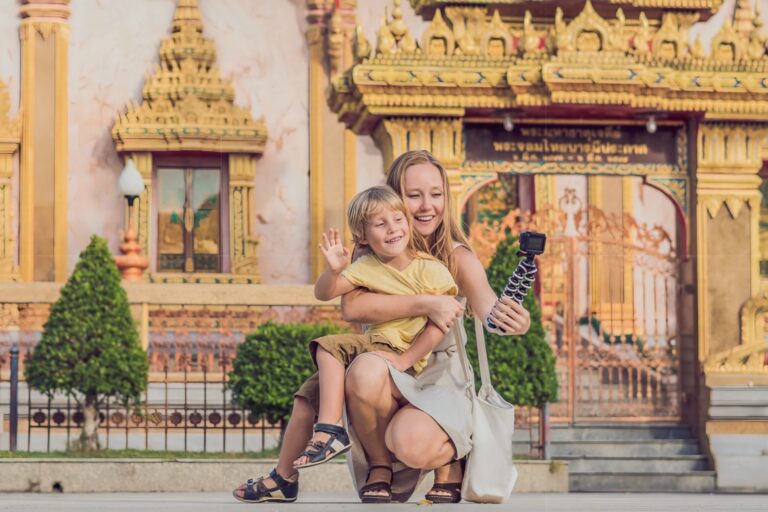
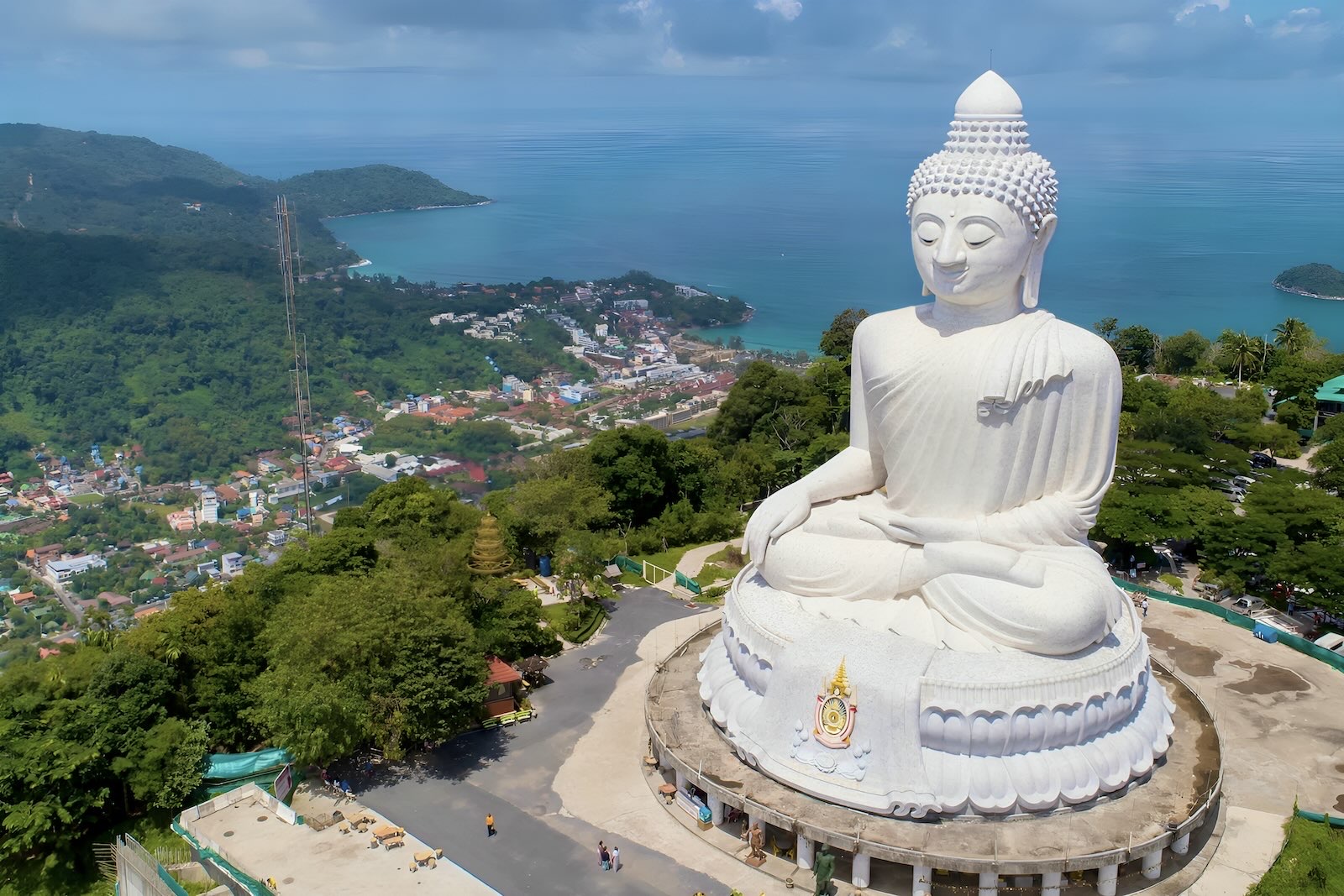
Big Buddha Phuket is one of the island's most recognizable landmarks. The 45-metre white Buddha stands high on Nakkerd Hill and can be seen from many parts of southern Phuket.
Visiting is about more than standing in front of the statue for a photograph. The elevated setting opens up different perspectives across the island, and the site itself remains a place of Buddhist worship.
For first-time visitors, the best experience comes from slowing down, walking around the site, and looking at Phuket from several directions.
Why Visit Big Buddha Phuket?
Big Buddha is not an ordinary Phuket viewpoint. It brings together a landmark, wide island views, and living Buddhist culture in one place.
The main Buddha stands roughly 45 metres high on Nakkerd Hill, an elevated hilltop with extensive panoramic outlooks. Travelling around the south and west of the island, you can often spot the white figure high above the surrounding hills.
That is part of what makes arriving here interesting. You finally reach a landmark you may have been noticing from a distance all week.
What Should You Actually Do at Big Buddha?
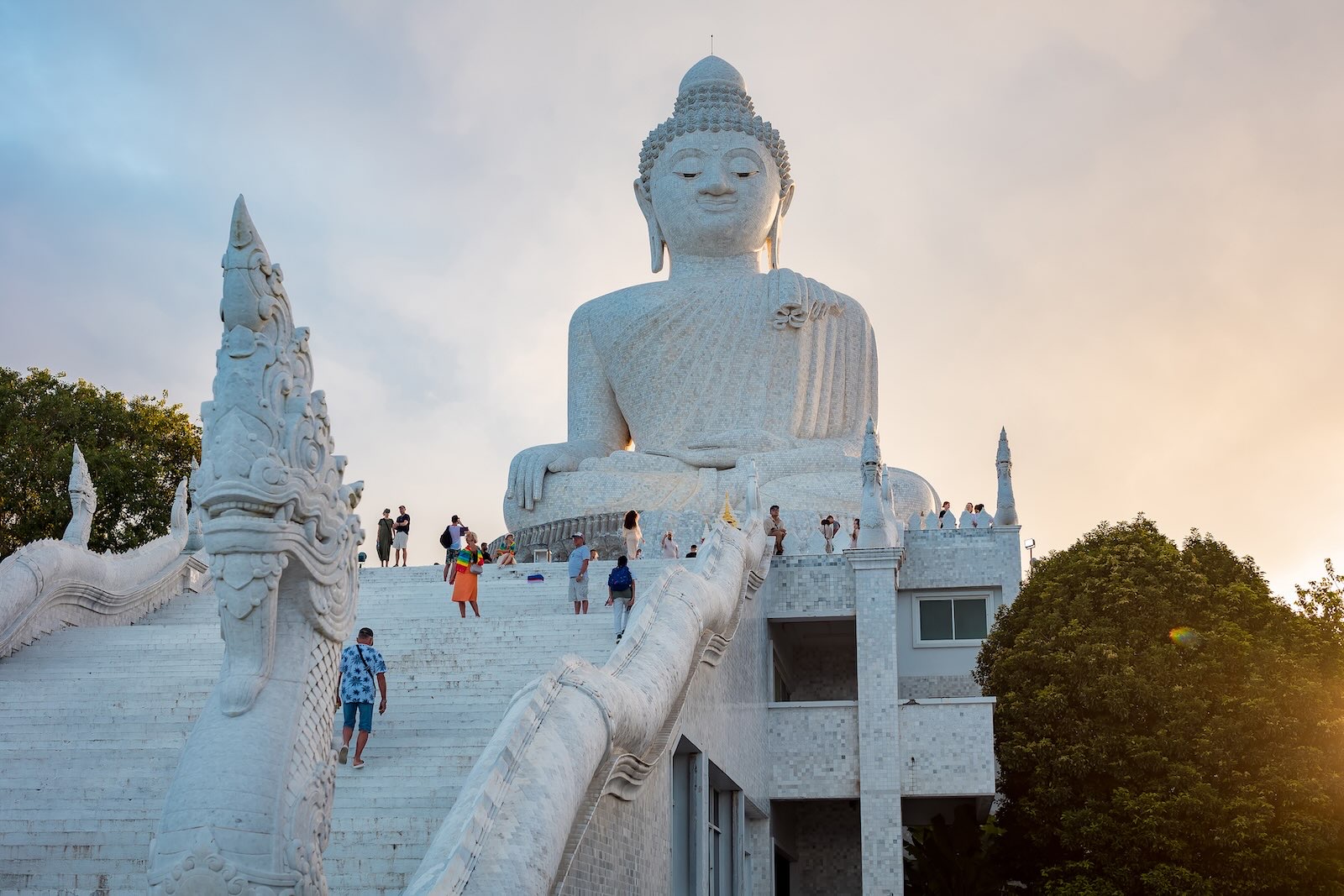
Many visitors arrive, photograph the statue, and leave within a few minutes. That approach misses most of the experience.
A better visit works in stages:
- Approach the main Buddha and take in its scale
- Explore the religious areas respectfully
- Notice the smaller Buddha images and decorative details
- Walk the full accessible area rather than one terrace
- Stop at each viewing point and look in different directions
- Leave time for photography once you know the best angles
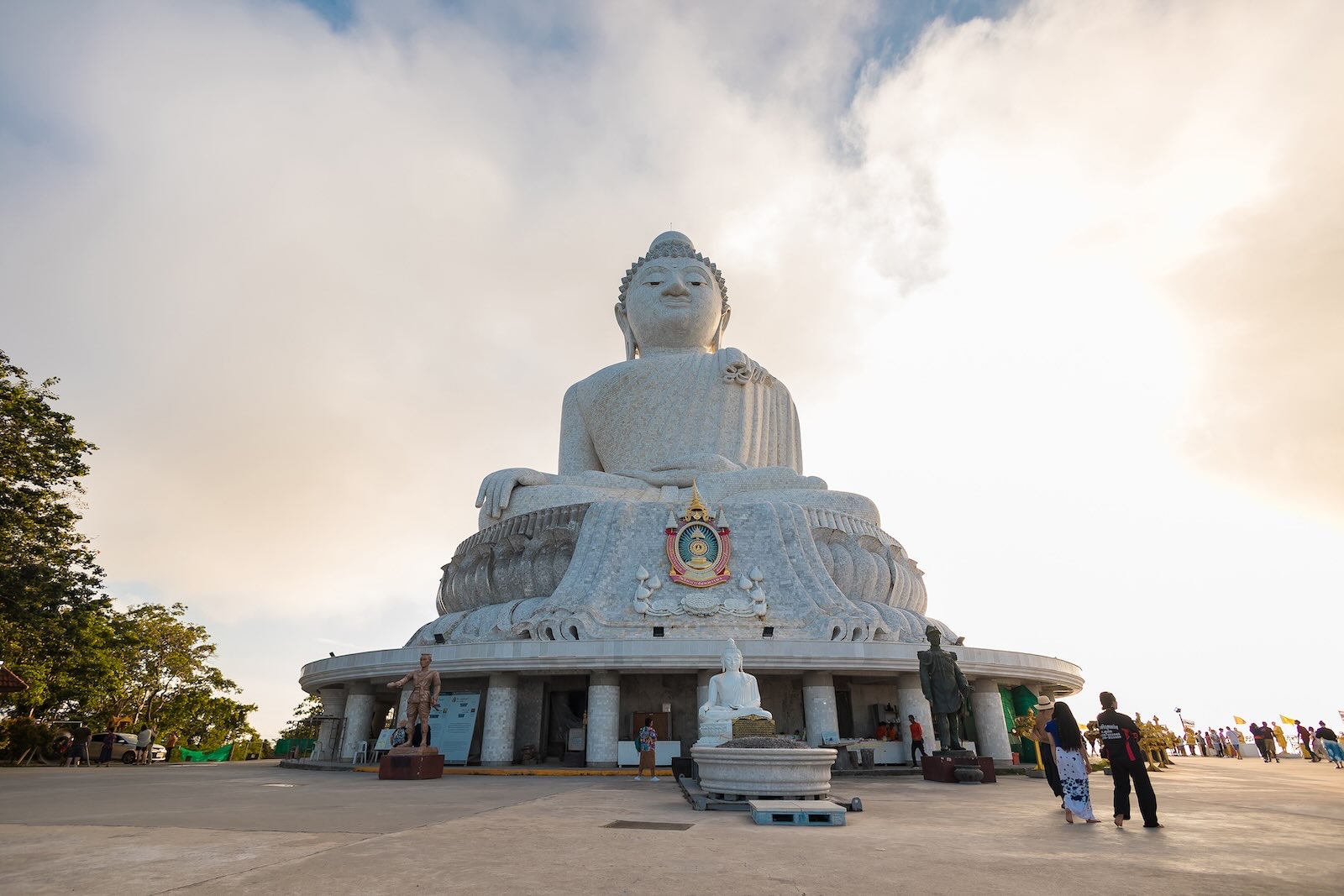
Walk First, Photograph Second
The site is larger than it appears from the car park. Each side of the hilltop frames Phuket differently, so a short walk changes what you see considerably.
Take a slow loop before choosing where to spend your time. You will also notice ongoing religious activity that is easy to miss when hurrying toward the statue.
The Panoramic Views from Nakkerd Hill
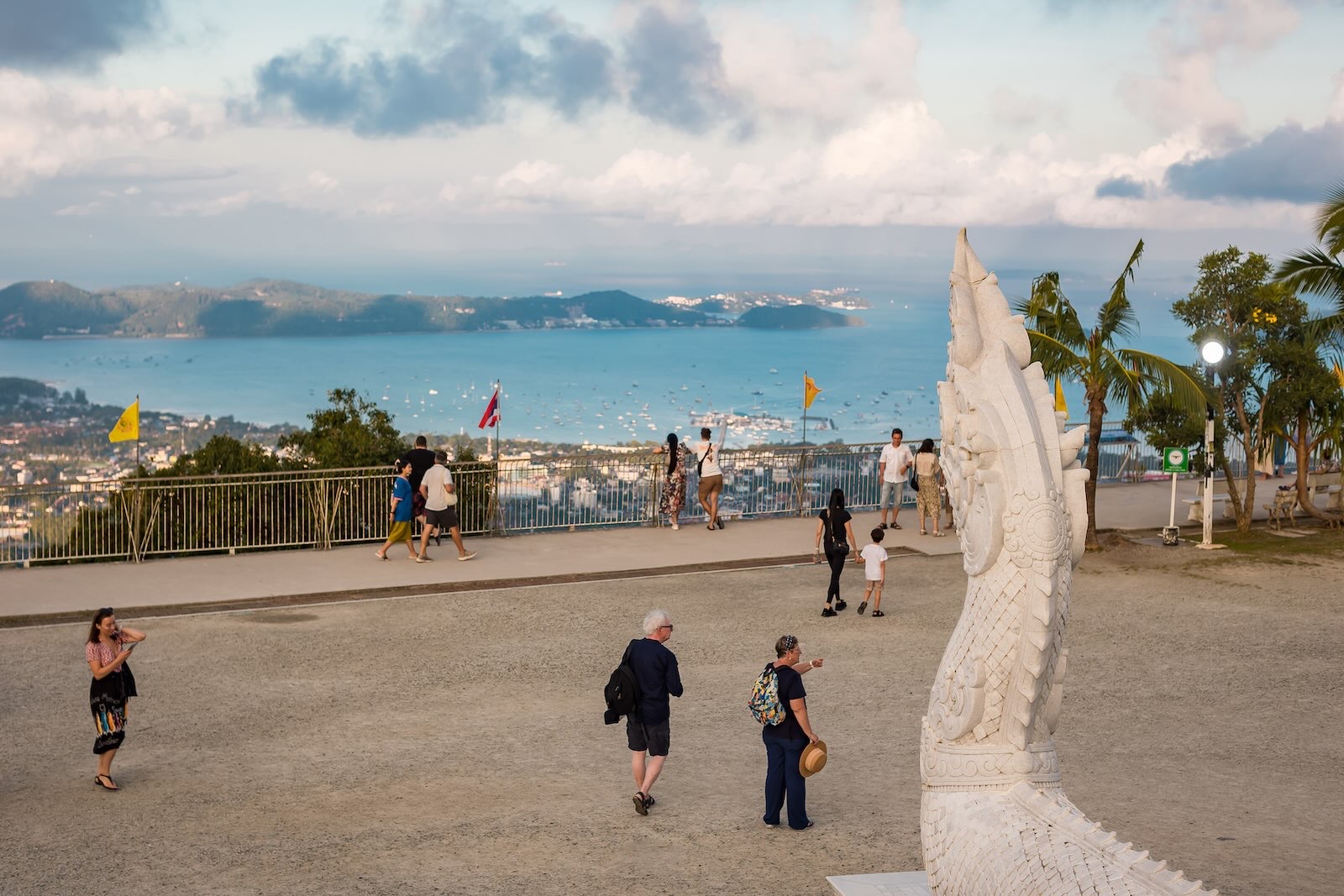
The elevated position is one of the strongest reasons to make the trip. On a clear day, the outlook toward Chalong and Chalong Bay shows how the southern part of the island fits together, from the harbour area out toward the smaller offshore islands.
This side of the hill is usually the first view people reach, and many stop there.
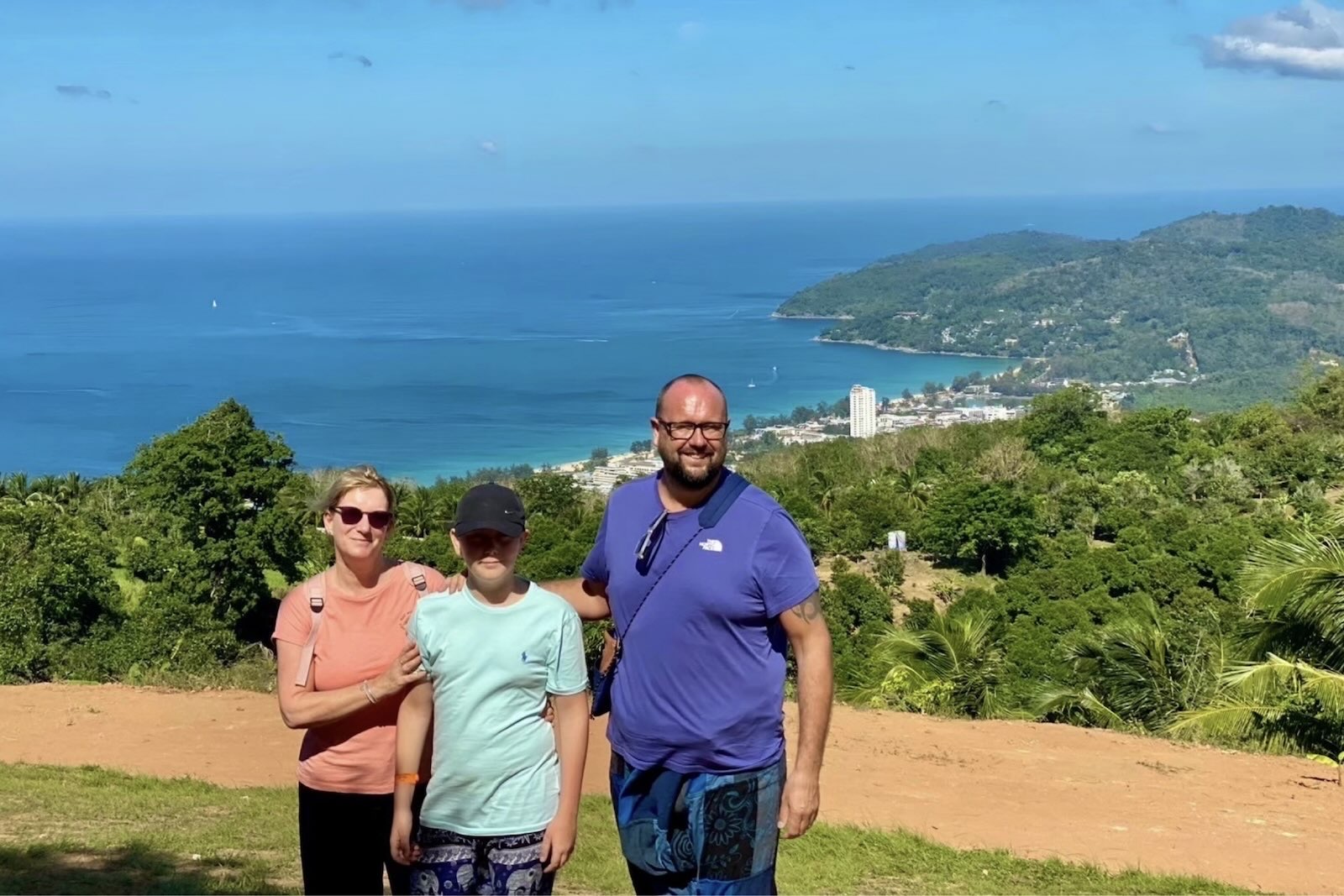
Look Toward the West Coast Too
Walk to the other side and the scene changes. Depending on where you stand, you can look toward the Kata and Karon direction, across forested hills, and out to the west-coast coastline.
Visibility varies. Haze, cloud, and rain all affect how far you can see, and no viewpoint in Phuket shows the whole island. Some days are crisp, others are soft and atmospheric.
Big Buddha Is Still a Religious Site
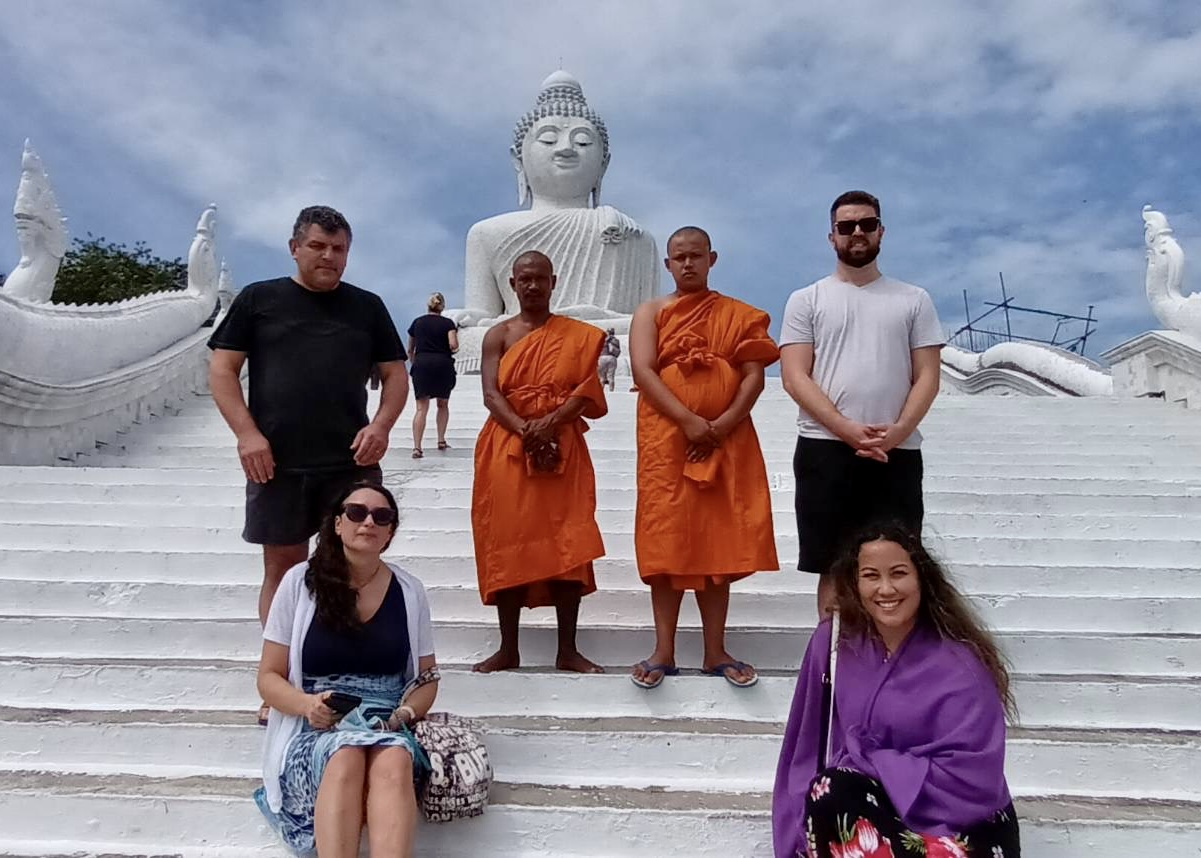
Although this is one of the most photographed places in Phuket, it is not a sightseeing platform. The site is connected with worship and everyday religious life.
During a visit you may see Buddha images, monks, people making merit, quiet prayer, offerings, and blessings taking place.
Watch, keep your distance where appropriate, and let people continue undisturbed. Buddhist practice here is not a performance arranged for visitors.
Sai Sin: The Blessing Thread Many Visitors Miss
Sai Sin (สายสิญจน์) is a sacred white thread associated with Buddhist blessing and protection in Thailand. You will see it at temples, ceremonies, and family occasions.
Depending on the day, current religious activity, and whether a monk is present, visitors may have the opportunity to receive a blessing and have a Sai Sin thread tied around the wrist. It is never guaranteed, and it is not a service included with a visit.
Temple Etiquette at Big Buddha
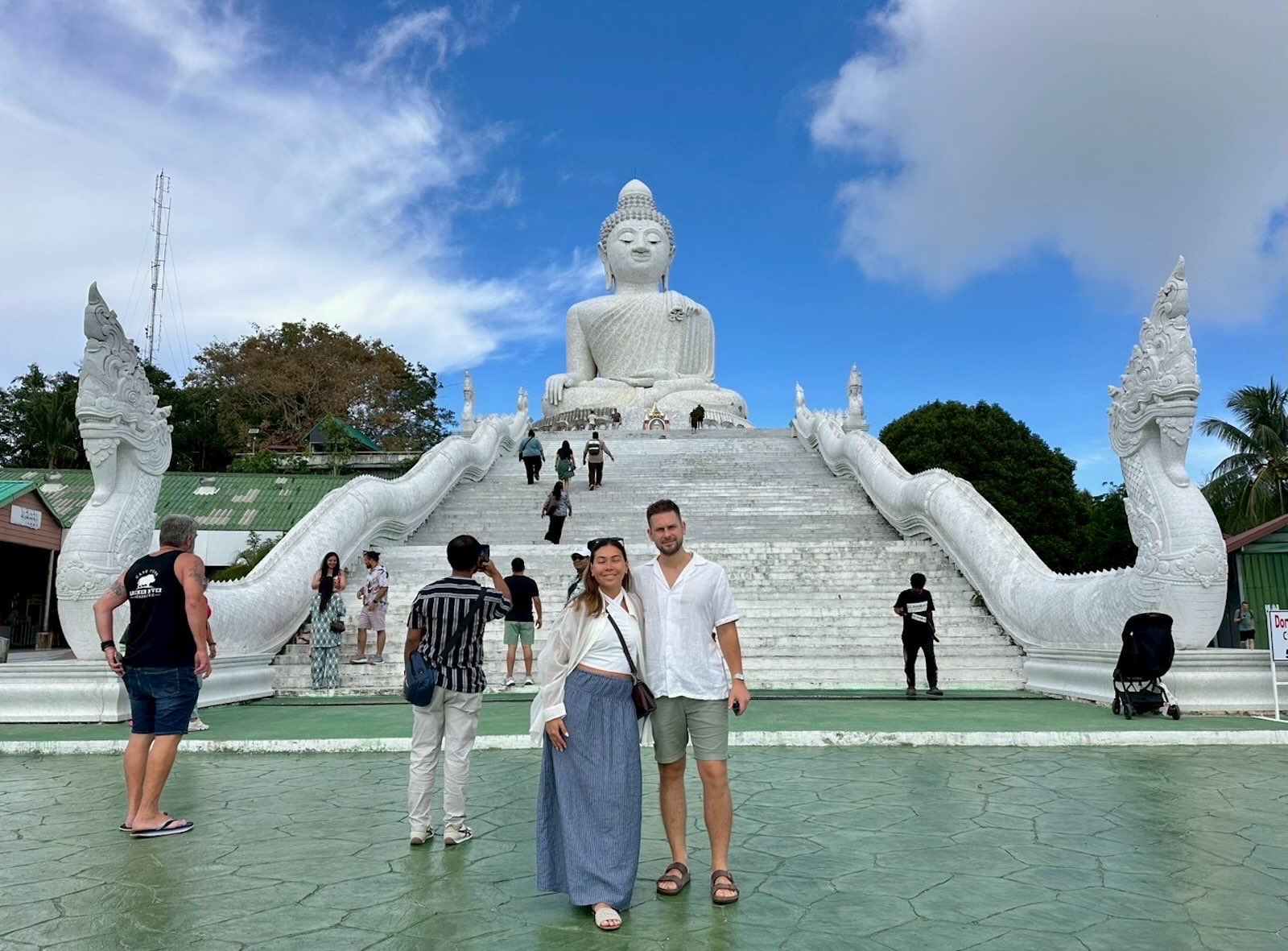
You do not need to understand every Buddhist custom. Being observant and respectful is usually enough.
- Cover shoulders and knees, and dress modestly
- Remove shoes where required
- Speak quietly around religious spaces
- Avoid pointing your feet toward Buddha images
- Never climb on or pose disrespectfully with Buddha images
- Ask before photographing monks closely
- Women should avoid physical contact with monks
- Follow signs and instructions from temple staff
Best Time to Visit Big Buddha
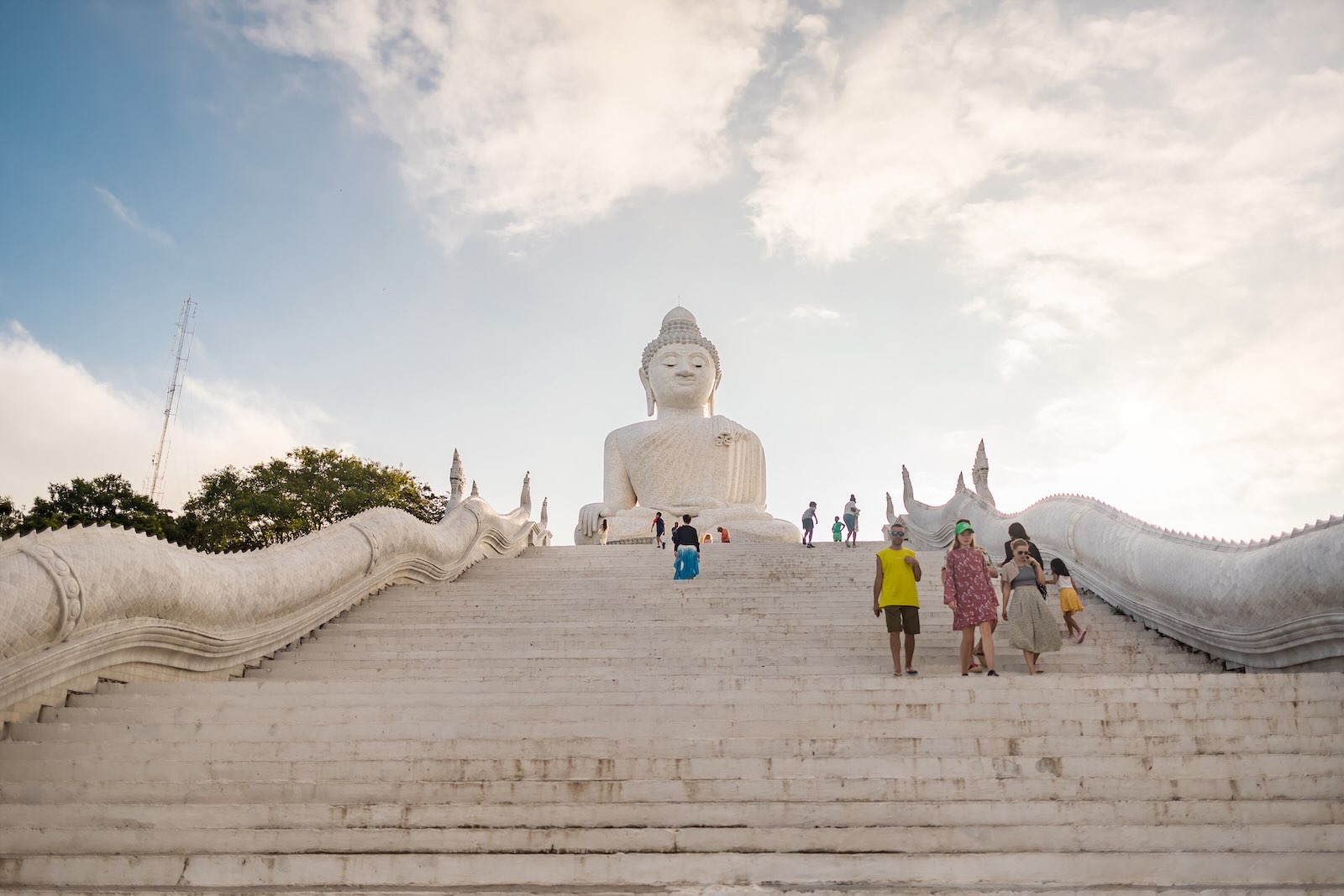
There is no single perfect time. Both ends of the day suit different travellers, and conditions vary from day to day.
Morning
- Cooler temperatures and more comfortable walking
- Often fewer visitors, though this varies by day
- Easy to continue to other attractions afterwards
Late Afternoon
- Softer light and more atmospheric photography
- A relaxed finish to a day of sightseeing
- Pleasant hilltop scenery as the heat eases
Sunset is never guaranteed here. Cloud and passing rain can change conditions quickly, so treat a colourful evening as a bonus rather than the reason to come.
How Long Should You Spend?
Photographing the statue alone takes minutes. Experiencing the place properly takes longer.
Around 45 to 60 minutes suits most first-time visitors, allowing time to see the main Buddha, walk the viewing areas, notice the religious activity, and enjoy the scenery. Keen photographers often want more.
Common Mistakes at Big Buddha
None of these ruin a visit, but avoiding them makes the trip far more rewarding:
- Leaving after one photo. The single most common mistake we see
- Ignoring the religious side. This is a place of worship, not only a scenic stop
- Arriving in beachwear. Shoulders and knees should be covered
- Looking in one direction only. Each viewing area frames Phuket differently
- Rushing. Allow time to walk, watch, and enjoy the scenery
- Expecting perfect visibility. Phuket weather decides what you see
For wider planning ideas, browse our guide to the best things to do in Phuket.
What to Combine with Big Buddha
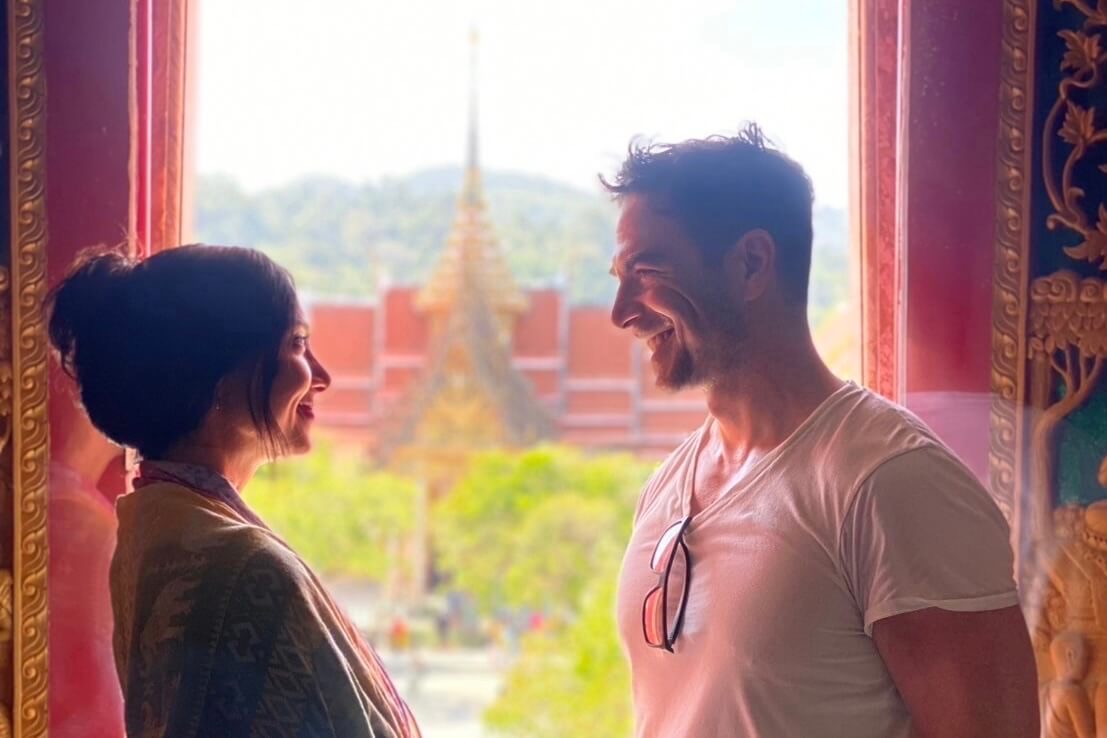
Big Buddha works especially well as part of a half-day cultural route, because several major stops connect logically in the south of the island.
Our recommended cultural route:
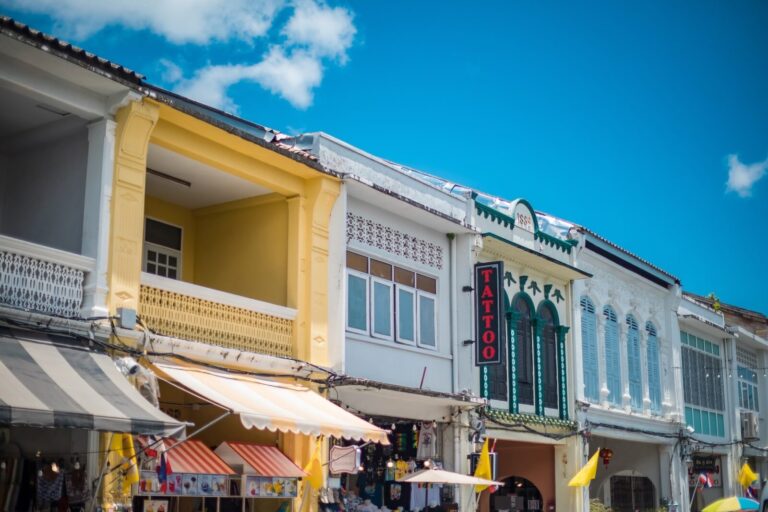
- Old Phuket Town ↓
- Local Phuket food ↓
- Wat Chalong ↓
- Big Buddha
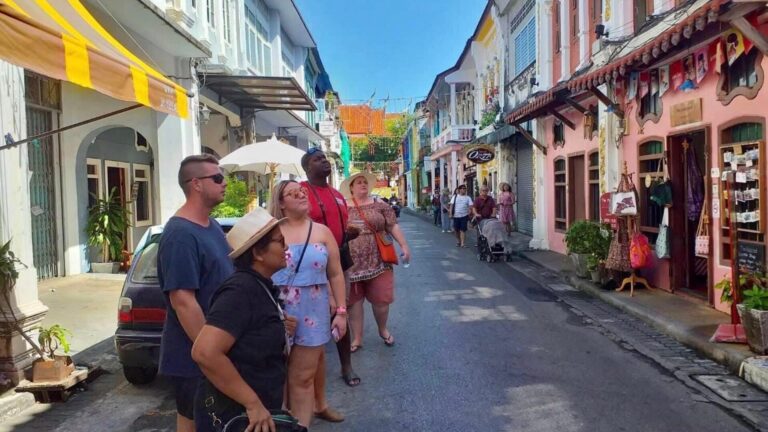
The order matters. Old Phuket Town provides the history, local food introduces Phuket through taste, Wat Chalong opens up the island's Buddhist culture, and Big Buddha closes the day with a major landmark and wide views. Our full Phuket City Tour Guide explains how the route fits together.
Prefer Something More Active?
Some visitors combine culture with activity, for example Wat Chalong, then an ATV experience, then Big Buddha. ATV operators run in the wider Nakkerd Hill area, so this pairing is practical when the timing is planned properly.
Our Local Expert Recommendation
Why We Love This Place
We recommend Big Buddha because of what the visit combines, not because the statue is large. Landscape, culture, religion, and views come together in one stop.
There is also something unusual about visiting a landmark you have already glimpsed from half the island. Standing at the top, walking from one side to the other, you start to understand how southern Phuket actually connects.