Wat Chalong Phuket is the island's best-known Buddhist temple and one of the most meaningful cultural stops for first-time visitors. It is not simply another ornate building on a sightseeing list — it remains an active place of worship where local people come to pray, make merit, and pay respect.
From our experience bringing guests here on cultural routes, the difference between a rushed photo stop and a memorable visit usually comes down to one thing: whether you slow down enough to understand what is happening around you.
This guide explains why the temple matters, what to see, how to visit respectfully, and how Wat Chalong fits naturally into a wider Phuket sightseeing day.
Why Visit Wat Chalong?
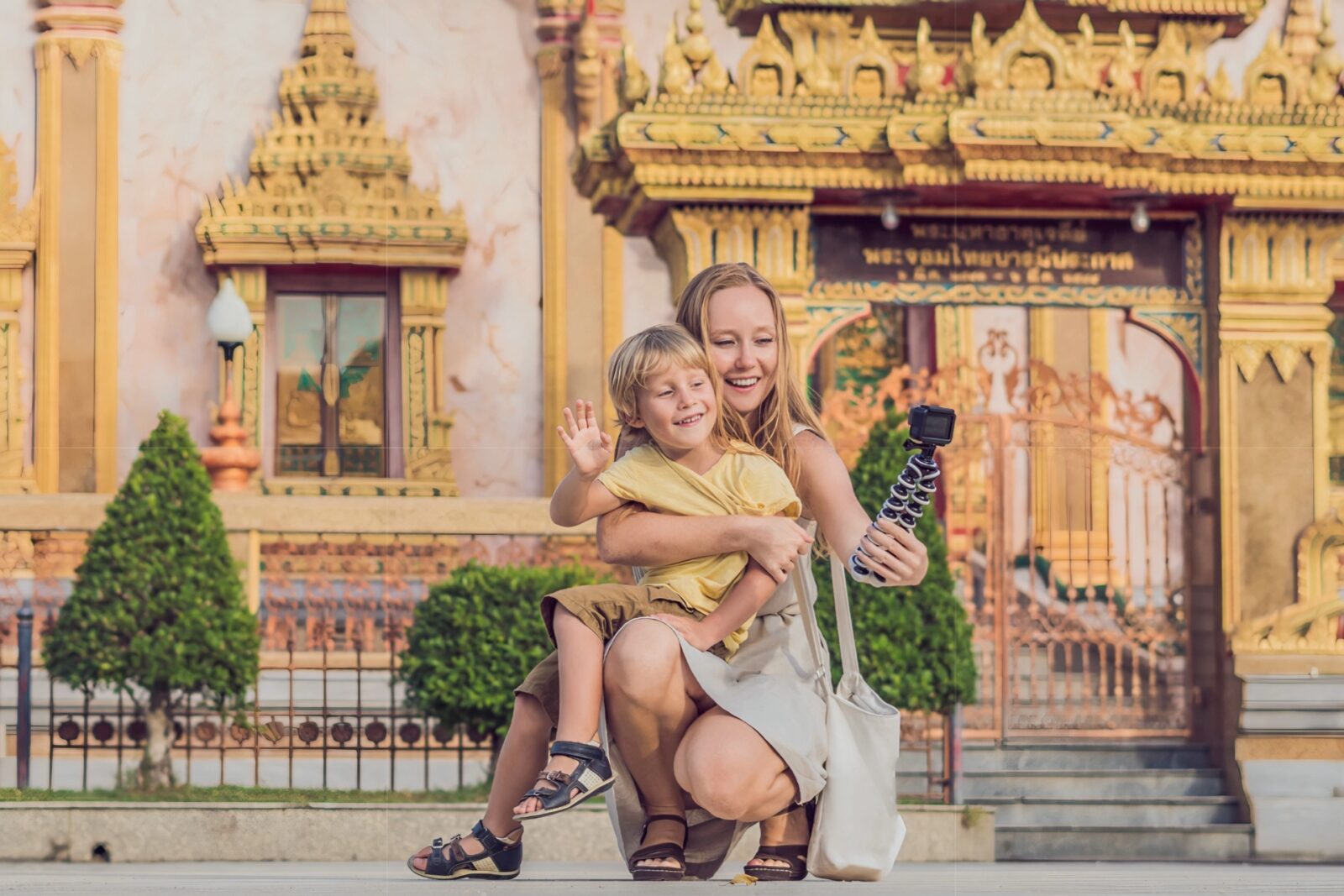
Wat Chalong is worth visiting because it brings together history, architecture, and living Buddhist culture in one accessible location. For many travelers, it is the first place in Phuket where temple life feels real rather than decorative.
The complex is also one of the island's larger and more architecturally impressive temple grounds. Even visitors who are not deeply familiar with Thai Buddhism can appreciate the scale of the buildings, the detail of the decoration, and the atmosphere of an active religious site.
In addition, the location is practical. Wat Chalong sits in a part of Phuket that connects naturally with several other major attractions, so it fits easily into a half-day cultural route without requiring a long detour across the island.
Why Wat Chalong Is Important to Phuket
Wat Chalong — formally known as Wat Chai Tharam — plays an important role in Phuket's local history. It is not a recreated tourist attraction; it is a temple that local communities have turned to for generations.
Phuket developed through tin mining, trade, migration, and periods of social unrest. Wat Chalong became closely associated with figures and traditions that local people still remember and respect today, especially Luang Pho Chaem.
One thing our team has noticed over the years is that the temple continues to develop while remaining active. New areas and facilities have been added, yet daily worship, merit-making, and local pilgrimage continue as they always have. The temple should not be thought of as a museum frozen in time.
Who Was Luang Pho Chaem?
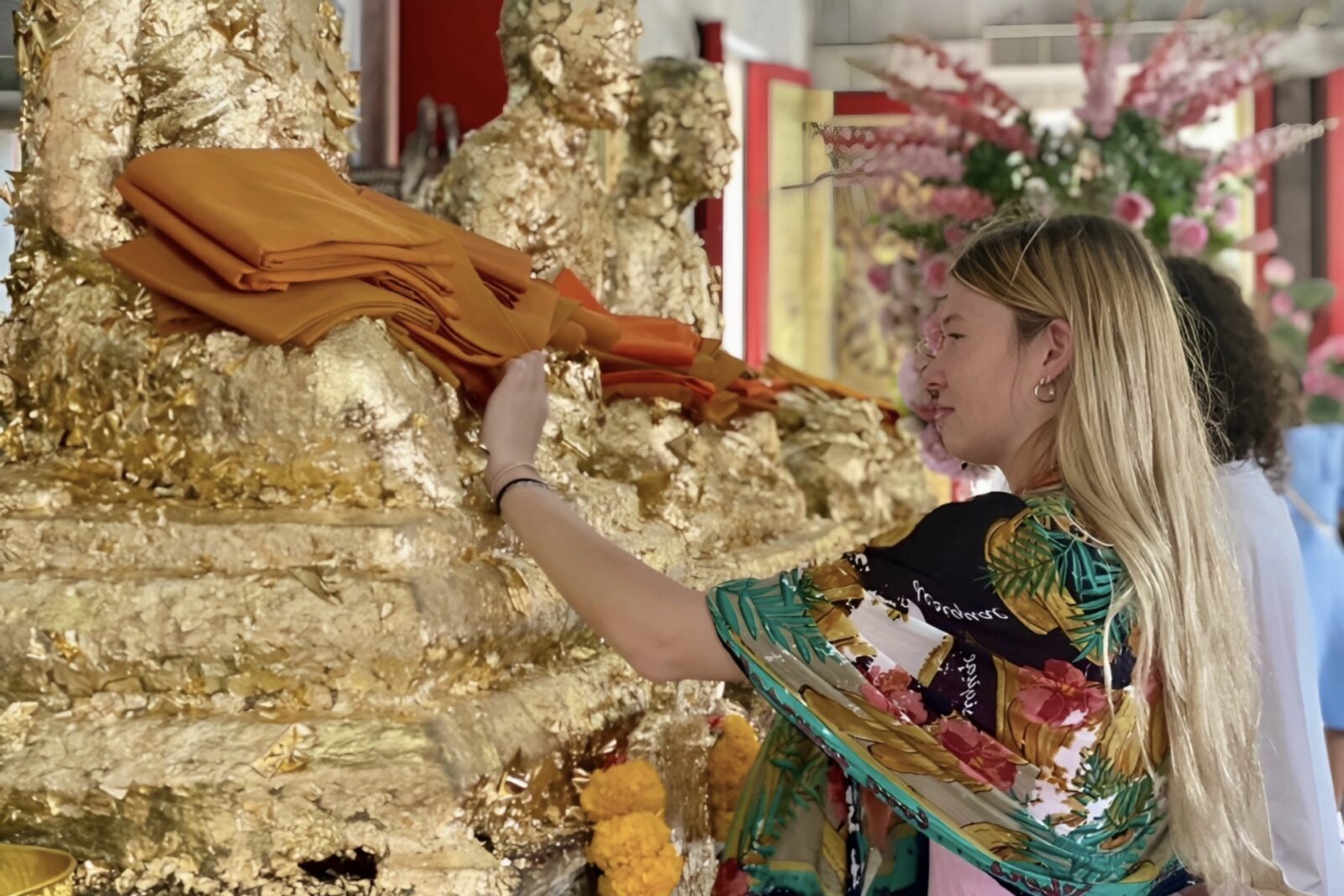
Luang Pho Chaem was a highly revered former abbot of Wat Chalong. He remains one of the most important figures connected with the temple and with Phuket's nineteenth-century history.
Historical accounts describe him as becoming particularly associated with supporting local people during unrest involving Chinese mine workers in Phuket. Local tradition holds that he provided encouragement and blessed cloth or amulets to people seeking comfort during a difficult period.
He was subsequently granted an ecclesiastical title during the reign of King Rama V. Today, his memory remains central to how many local visitors understand Wat Chalong.
It is also important to separate documented history from belief. Stories about protection, blessings, and sacred power are part of local Buddhist tradition and devotion — they should be understood as faith and cultural memory, not presented as verified historical fact.
What to See at Wat Chalong
Most first-time visitors concentrate on the main buildings and the grand chedi. That makes sense, but there is more to notice if you walk slowly and look beyond the most obvious photo angles.
Main Temple Buildings
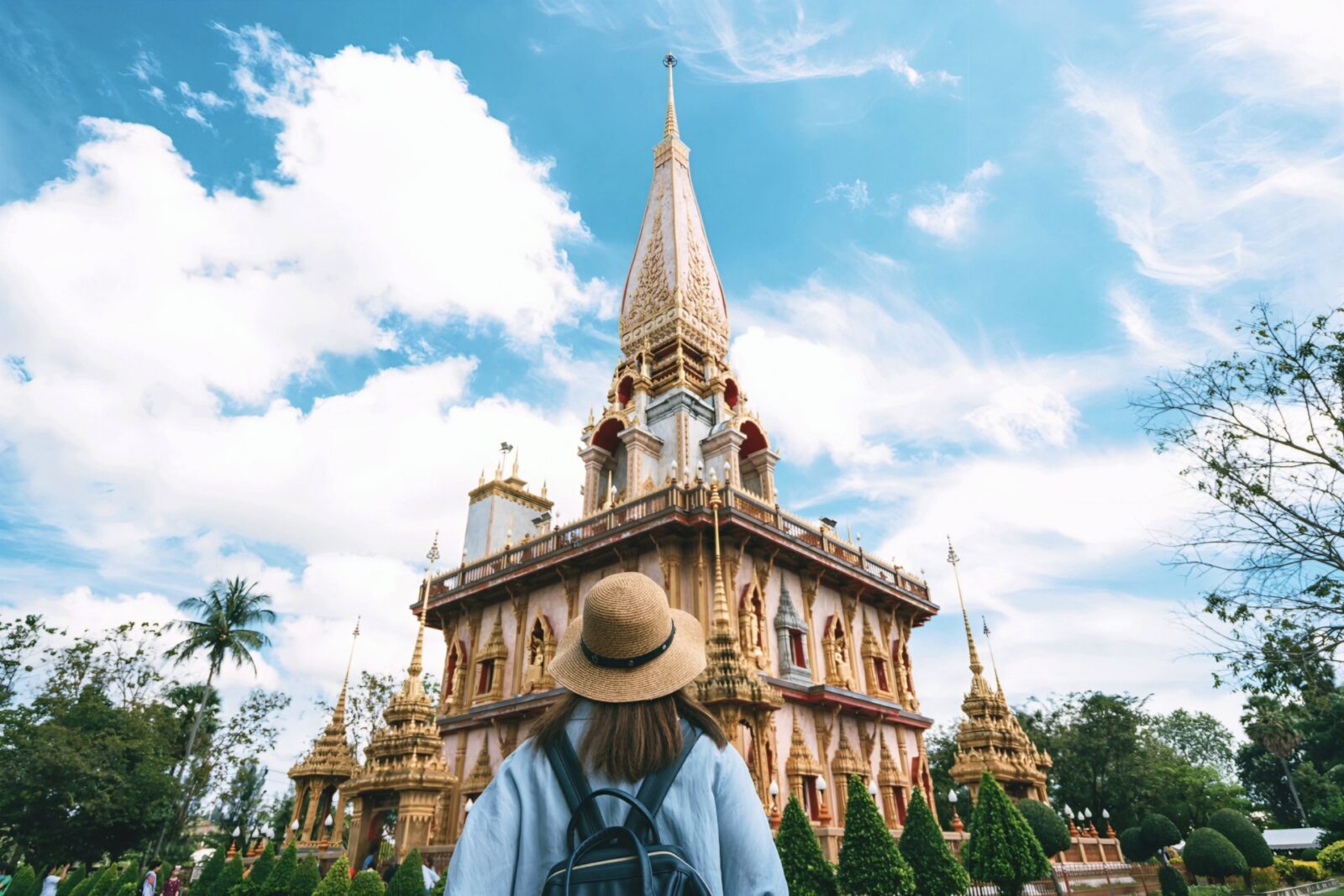
The main temple buildings are where much of the daily religious activity takes place. Inside and around these halls, you may see Buddha images, offerings, candles, incense, and local worshippers praying quietly.
Look for architectural details, decorative elements, and the way spaces are arranged for devotion rather than tourism. Some buildings may have specific rules about shoes, photography, or entry — follow the signs at each building.
The Buddha Relic & Grand Chedi
One of the most striking features of Wat Chalong is its grand chedi. The temple's grand chedi is believed to enshrine a sacred relic of the Buddha.
According to Phuket provincial information, Buddha relics enshrined at the temple were received from Sri Lanka. For many Thai Buddhists, this gives the site additional spiritual significance beyond its local historical importance.
Visitors can often explore the chedi area and enjoy elevated views over part of the temple grounds. However, treat the space as a religious site first and a viewpoint second.
Don't Miss the Luang Pho Chaem Museum
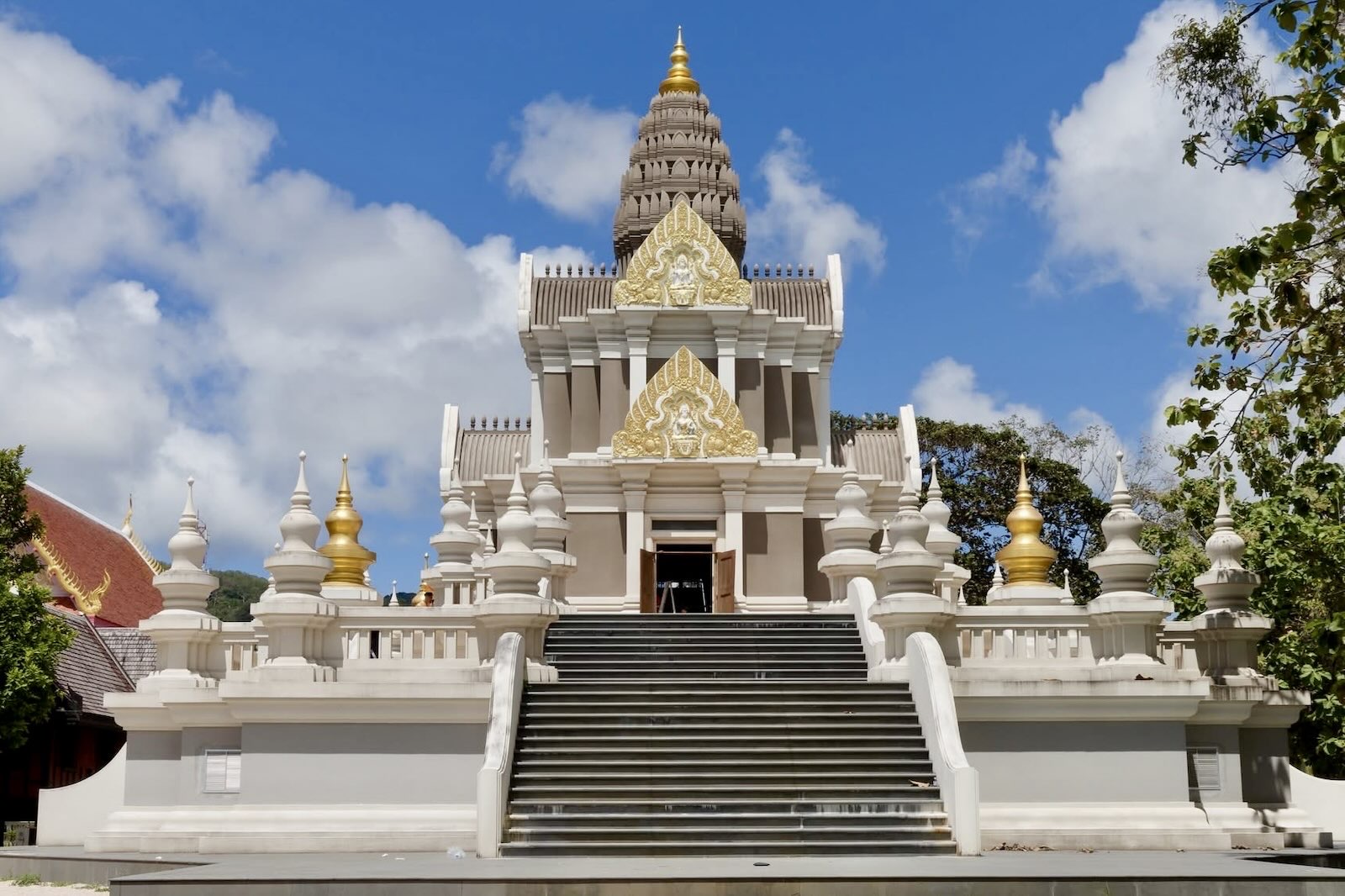
One detail our local team recommends that many visitors overlook is the newer Luang Pho Chaem Museum area.
It is easy to spend all your time at the main temple buildings and the chedi, then leave without learning more about the figure most closely associated with Wat Chalong's place in Phuket history. The museum area is dedicated to Luang Pho Chaem and offers context that helps the rest of the visit make more sense.
We do not recommend skipping it if you want more than a surface-level temple walk. Allow a little extra time to look around respectfully and read what is on display.
Don't Just See Wat Chalong — Experience It
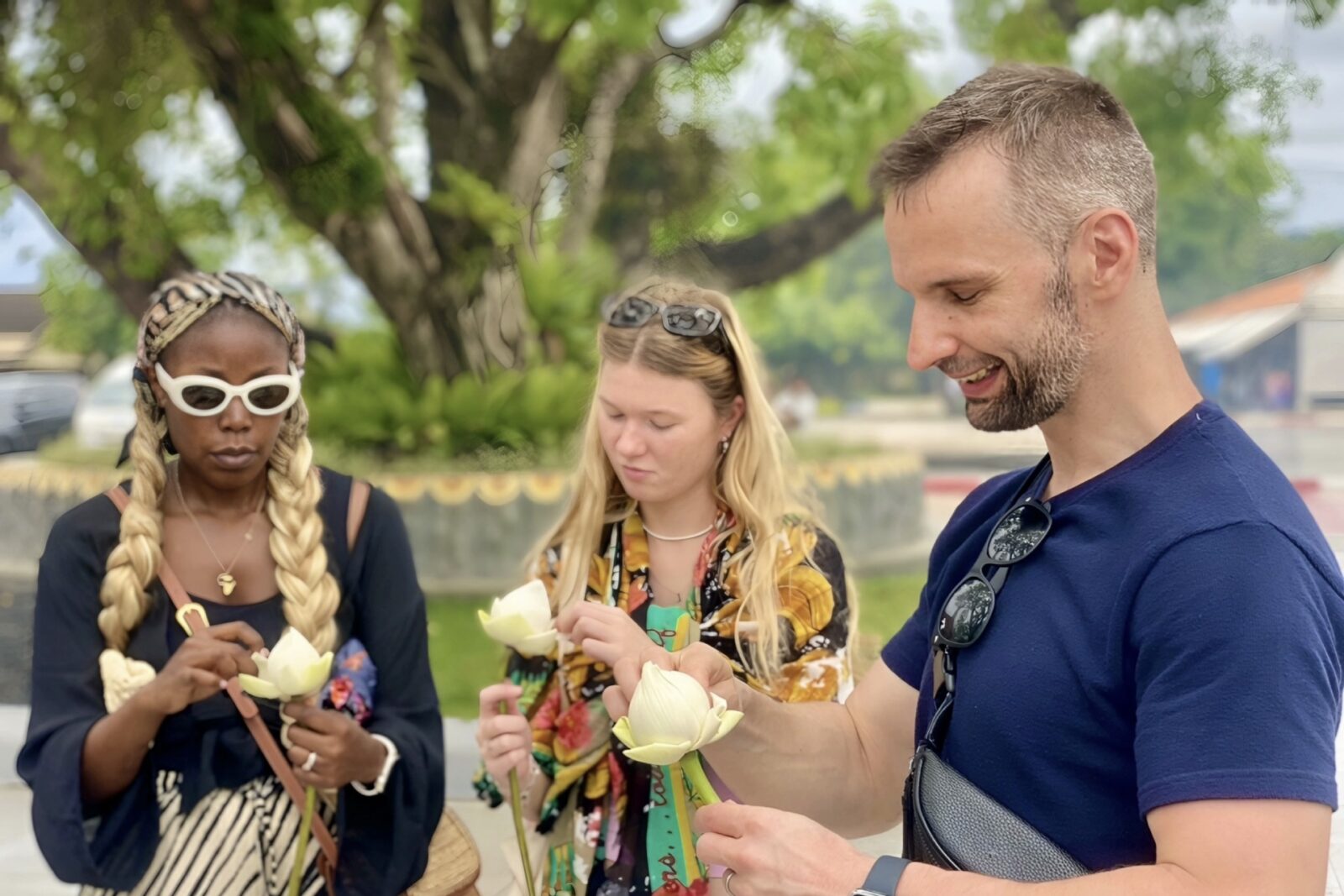
Many visitors walk around, photograph the buildings, and leave within twenty minutes. Our local recommendation is different: slow down, observe what local visitors are doing, and — where appropriate — respectfully take part in some of the traditions if you feel comfortable.
You do not need to be Buddhist to appreciate the experience. You do need to be respectful.
Possible experiences may include:
- Preparing or folding lotus flowers as an offering
- Lighting candles or incense where permitted
- Observing or trying fortune sticks with guidance
- Observing the tradition of applying small pieces of gold leaf at the appropriate statue
- Watching local worship quietly before taking photographs
Participation is always optional. If you are unsure what to do, watch first or ask a guide. Nothing should be treated as a performance arranged for tourists.
Why Can You Hear Firecrackers at Wat Chalong?
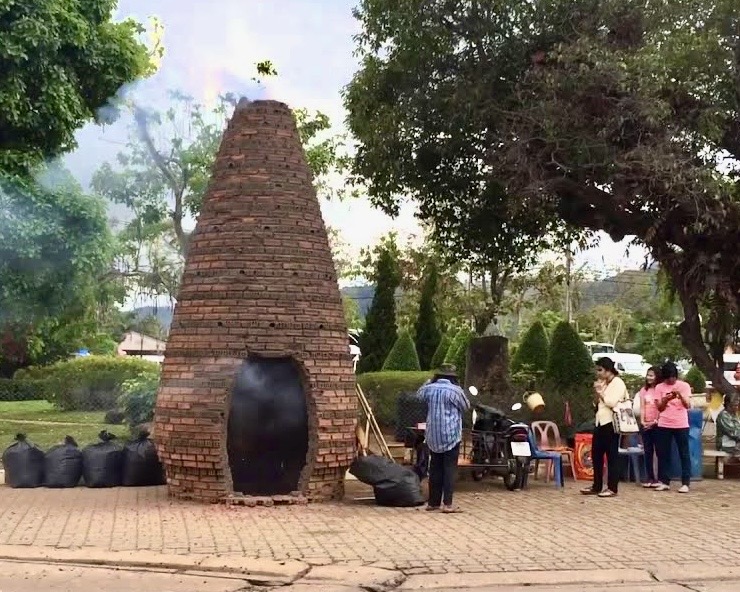
First-time visitors are often surprised by sudden loud explosions at the temple. The sound can feel unexpected, especially if you assume a temple should always be quiet.
In Wat Chalong's living religious culture, firecrackers are connected with worship, merit-making, and expressions of gratitude or respect. They are not random construction noise or a tourist attraction being staged for effect.
Instead, the tradition is intentional. Firecrackers are set off in a designated structure or area rather than visitors lighting them freely across the temple grounds. When we bring guests here, we explain this early so the sound feels less confusing when it happens.
The exact spiritual meaning can vary depending on the occasion and the person making the offering. What matters for visitors is understanding that the noise is part of active temple life — interesting, respectful, and normal here.
Wat Chalong Temple Etiquette
Visitors are welcome at Wat Chalong. Basic respect is what matters most.
- Cover shoulders and knees
- Dress respectfully — avoid beachwear or revealing clothing
- Remove shoes before entering buildings where required
- Keep your voice low around people who are praying
- Do not climb on religious structures
- Do not touch Buddha images unnecessarily
- Avoid pointing your feet toward Buddha images
- Be considerate when photographing people who are worshipping
- Behave respectfully around monks and follow local customs
- Follow signs and instructions at individual buildings
Temple etiquette is not about making visitors feel unwelcome. It is about allowing religious life to continue normally while guests observe and learn.
A Detail Tourists Sometimes Misunderstand
Thai temple complexes sometimes include a crematorium used for Buddhist funeral ceremonies. At Wat Chalong, our team has occasionally seen visitors photograph this building because its architecture looks similar to other ornate temple structures from a distance.
Understanding what the building is helps visitors treat the area with appropriate respect. A crematorium is part of real religious and community life, not a decorative pavilion for casual sightseeing.
This is not about shaming anyone for taking photographs. It is simply one of those local details that makes a visit more culturally aware.
Best Time to Visit Wat Chalong Phuket
Our local recommendation is to visit in the morning.
Morning usually brings cooler temperatures, more comfortable walking, softer light for photography, and a calmer atmosphere. Depending on the day, there may also be fewer large sightseeing groups than later in the afternoon.
That said, Wat Chalong can still be visited later in the day. If morning does not fit your schedule, go when you can — just expect warmer conditions and a busier atmosphere at peak times.
How Long Do You Need at Wat Chalong?
We recommend allowing around 40–60 minutes.
Someone moving quickly and photographing only the main buildings could walk through faster. However, 40–60 minutes gives enough time to explore the grounds, understand Luang Pho Chaem, visit important buildings, see the chedi, notice local traditions, participate respectfully if you wish, and take photographs without rushing.
If you also plan to spend time in the Luang Pho Chaem Museum area, lean toward the longer end of that range.
What to Combine With Wat Chalong
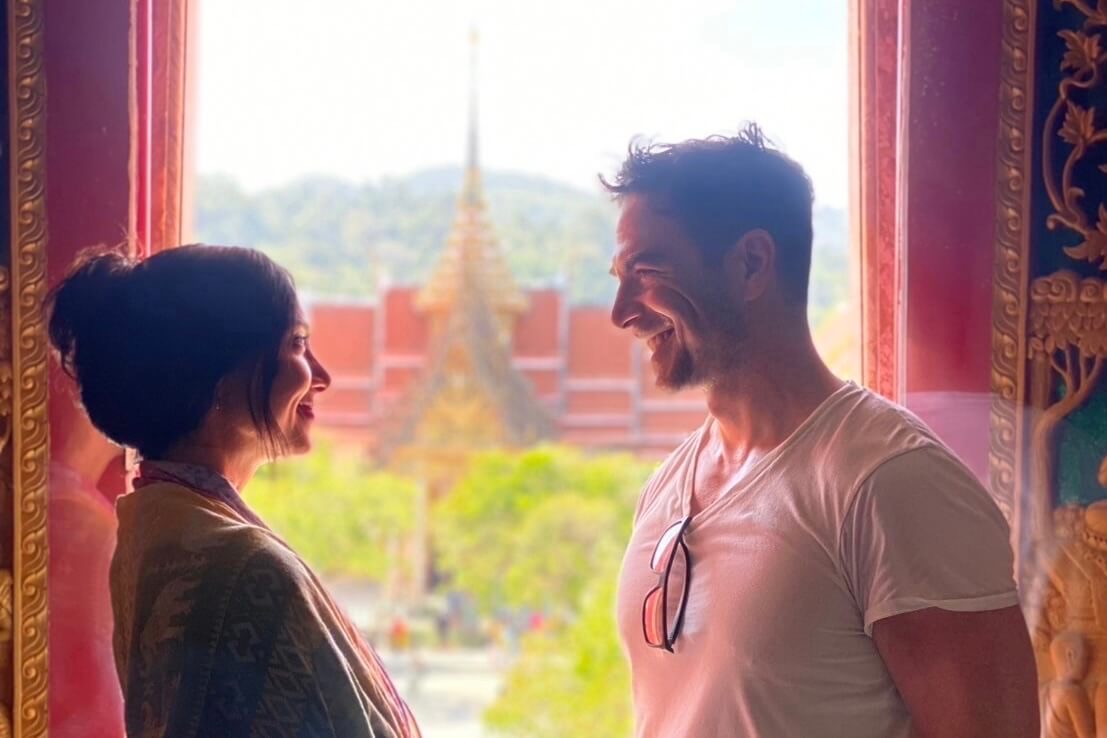
Wat Chalong works best as part of a wider cultural day rather than as a standalone stop reached from one side of the island and then back again.
Our preferred sightseeing progression is:
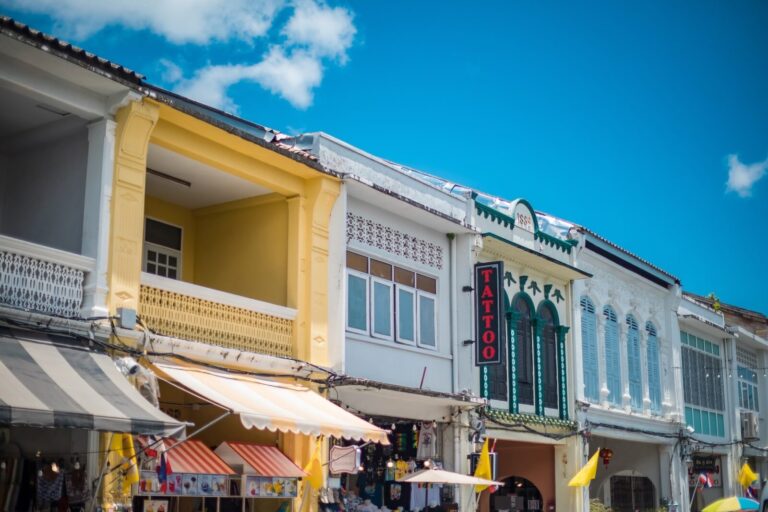
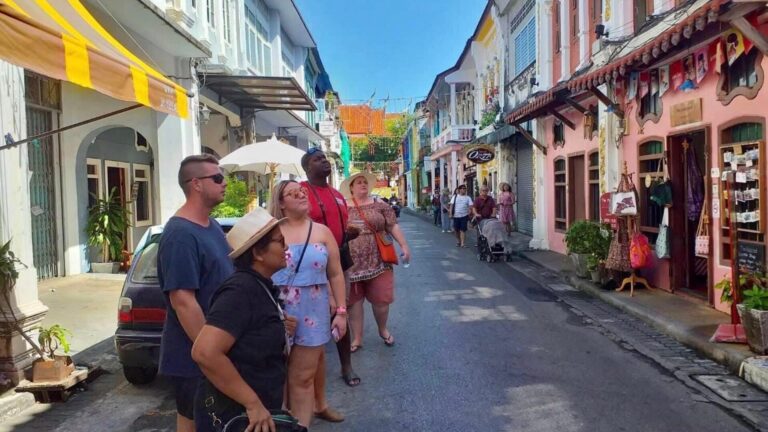
- Old Phuket Town ↓
- Local Phuket food ↓
- Wat Chalong ↓
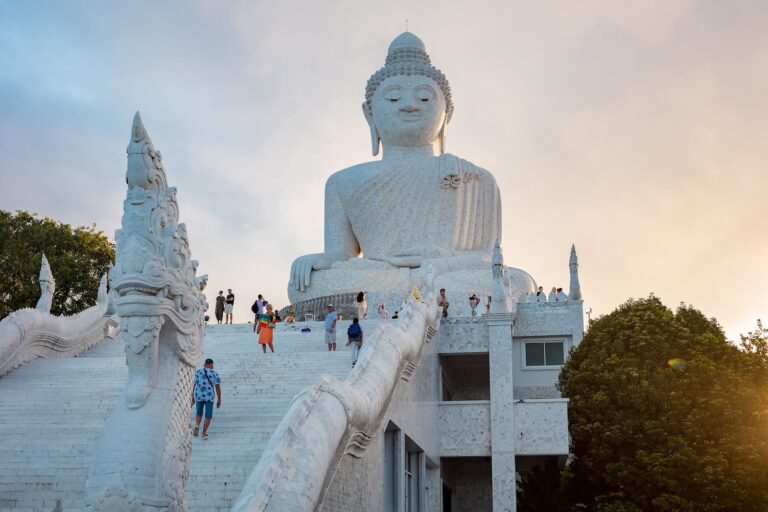
- Big Buddha
The route works conceptually because it moves through History → Taste → Culture → Views. Each stop adds something different instead of repeating the same kind of experience.
Efficient routing matters in Phuket because traffic and distances can make a poorly planned sightseeing day feel much longer than expected. Attractions that look close on a map are not always quick to reach in practice.
For full route planning, read our Phuket City Tour Guide, our Big Buddha guide, and our overview of the best things to do in Phuket.
Visiting Independently vs Taking a Phuket City Tour
Both approaches can work. The right choice depends on how much context and coordination you want.
Visiting independently gives more flexibility. You choose your own timing, move at your own pace, and can combine Wat Chalong with other stops if you are comfortable planning transport and routing yourself.
Taking a guided city tour is often better for first-time visitors who want historical and cultural context, help understanding rituals, and efficient routing without navigating Phuket traffic between multiple stops. When we bring guests here, explaining Luang Pho Chaem, firecracker traditions, and respectful participation usually makes the visit feel much richer than walking through alone.
Neither option is inherently better. Independent travel suits confident planners; guided travel suits visitors who prefer the logistics handled and the stories explained.
Wat Chalong FAQ
Is Wat Chalong worth visiting?
Yes, especially if you want to understand Phuket's culture and history beyond the beaches. It is one of the most important and accessible temple experiences on the island.
Is Wat Chalong free to enter?
There is no admission fee to visit Wat Chalong. Donations are welcome and help support the temple.
What should I wear to Wat Chalong?
Cover shoulders and knees, and dress respectfully. Avoid beachwear or clothing that would be inappropriate in an active place of worship.
How long should I spend there?
Allow around 40–60 minutes for a meaningful visit. A quick photo walk can be shorter, but you will miss much of what makes the temple special.
Why are there firecrackers?
Firecrackers are part of local worship and expressions of gratitude or respect. They are set off in designated areas and are a normal part of active temple life at Wat Chalong.
Can tourists participate in temple activities?
Yes, in many cases — respectfully and optionally. Activities such as lotus offerings, candles, incense, or fortune sticks should be approached with guidance and genuine respect, not as entertainment.
What is the best time to visit?
Morning is our local recommendation for cooler temperatures, softer light, and a generally calmer atmosphere. Later visits are still possible.
Can I visit Wat Chalong and Big Buddha on the same day?
Yes. They combine naturally on a cultural route through the south of the island, especially when paired with Old Phuket Town and a local lunch stop. See our Big Buddha guide for more on that combination.
Our Local Expert Recommendation
We recommend Wat Chalong because it helps visitors understand Phuket as a living place, not only a holiday destination. The architecture is impressive, but the deeper value comes from watching how local people use the temple today.
From our experience, the visitors who gain the most are not necessarily the ones who take the most photos. They are the ones who pause long enough to notice offerings, hear firecrackers with context, visit the Luang Pho Chaem Museum area, and treat the grounds as an active religious site.
Combine it thoughtfully with Old Phuket Town, local food, and Big Buddha, and Wat Chalong becomes one of the strongest cultural stops on the island.